Data Pipeline
The data pipeline of the InfDB-basedata-buildings is shown in the following figure. It consists of three main stages: data transformation, validation and enrichment. The pipeline is designed to process building-related data from various sources and prepare it for use in InfDB.
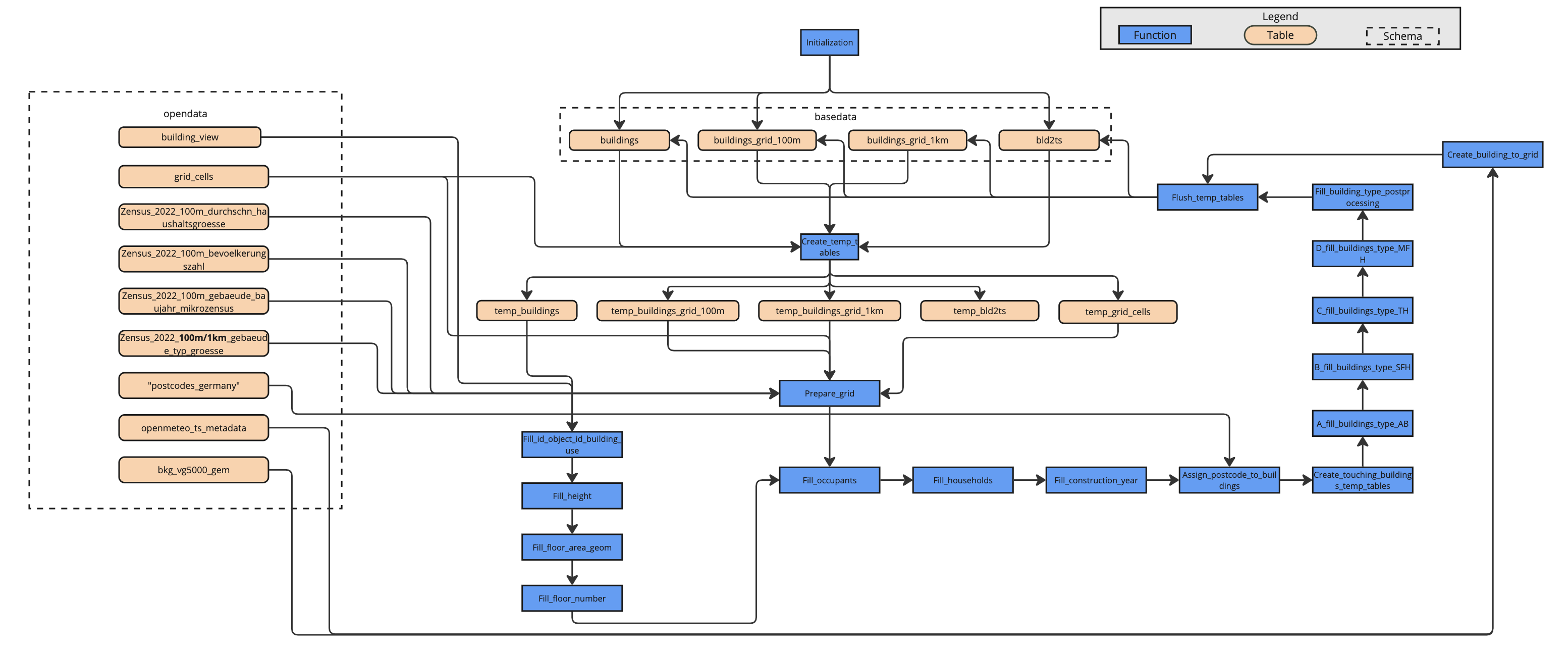
Data Transformation: LOD2 data is processed and combined with Zensus 2022 data to derive key building characteristics — such as building type and construction period — that are required for downstream tools (e.g. RO-heat).
Data Validation: Once building characteristics are assigned, aggregated values at the grid-cell level are calculated. These are then refined and validated using Zensus 2022 data available at 100 m × 100 m and 1 km × 1 km grid resolutions.
Data Enrichment: Where LOD2 attributes (e.g. building height or number of above-ground storeys) are missing, these values are estimated using average characteristics from neighbouring buildings.
Output Data
The main output of the tool is:
- Detailed Building Information (e.g. Building Type, Number of Households, Number of floors)
- Building Time Series Information - specified using geographical location (e.g. openmeteo hourly temperature)
The output datasets are stored in the basedata schema of the InfDB PostgreSQL database. It contains the following tables:
- buildings_grid_100m: Contains Zensus 2022 building information for 100m x 100m grid cells (number of inhabitants, average household size, distribution of building types, distribution of construction years).
- buildings_grid_1km: Contains Zensus 2022 building information for 1km x 1km grid cells (number of inhabitants, average household size, distribution of building types, distribution of construction years).
- buildings: Contains information for each specific building defined in the LOD2 database within the chosen AGS (height, floor area, number of floors, building use, building type, number of occupants, number of households, construction period, geographical information)
- bld2ts: Relates every building in the LOD2 database with its specific time series data within the chosen AGS (openmeteo hourly temperature)